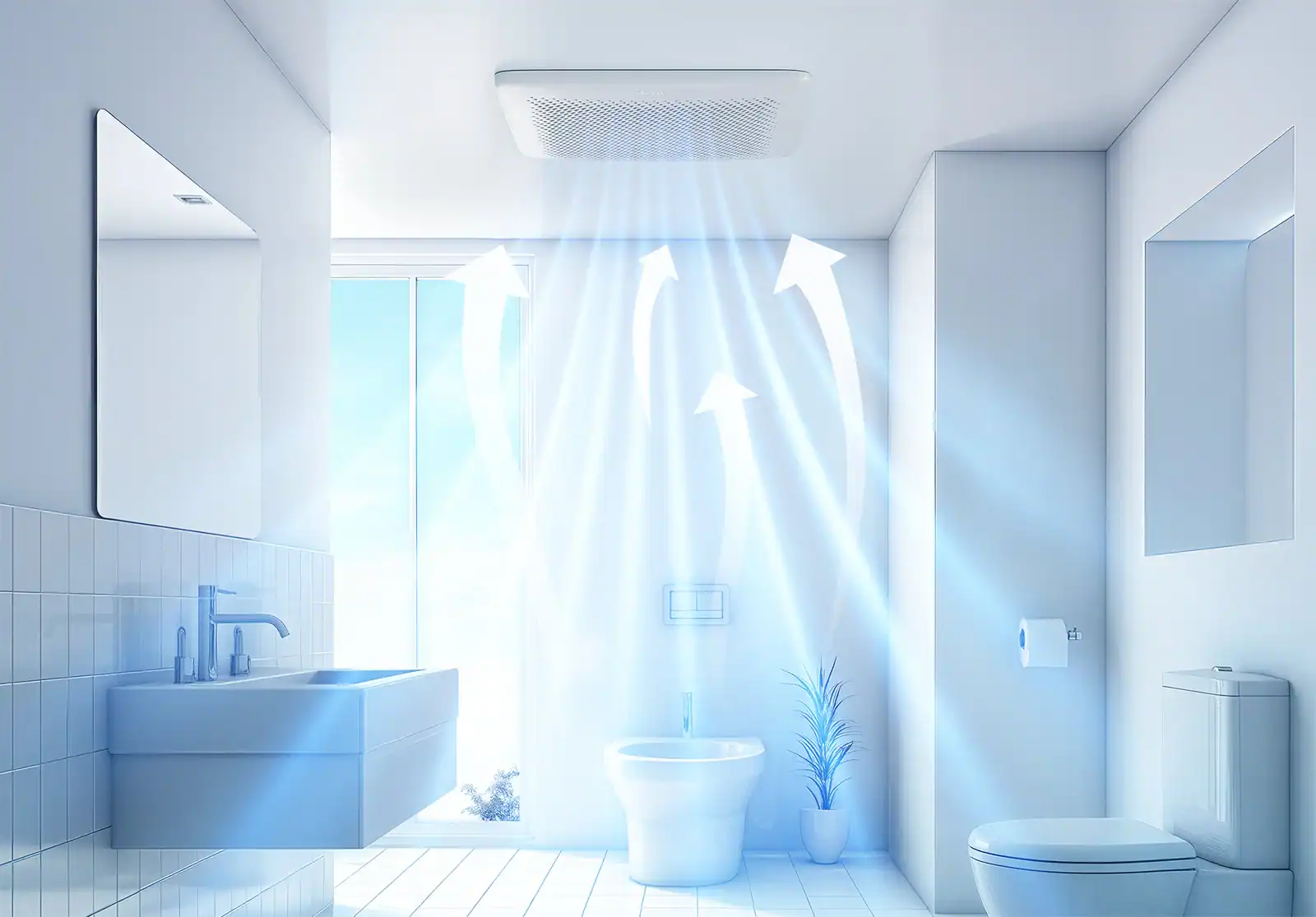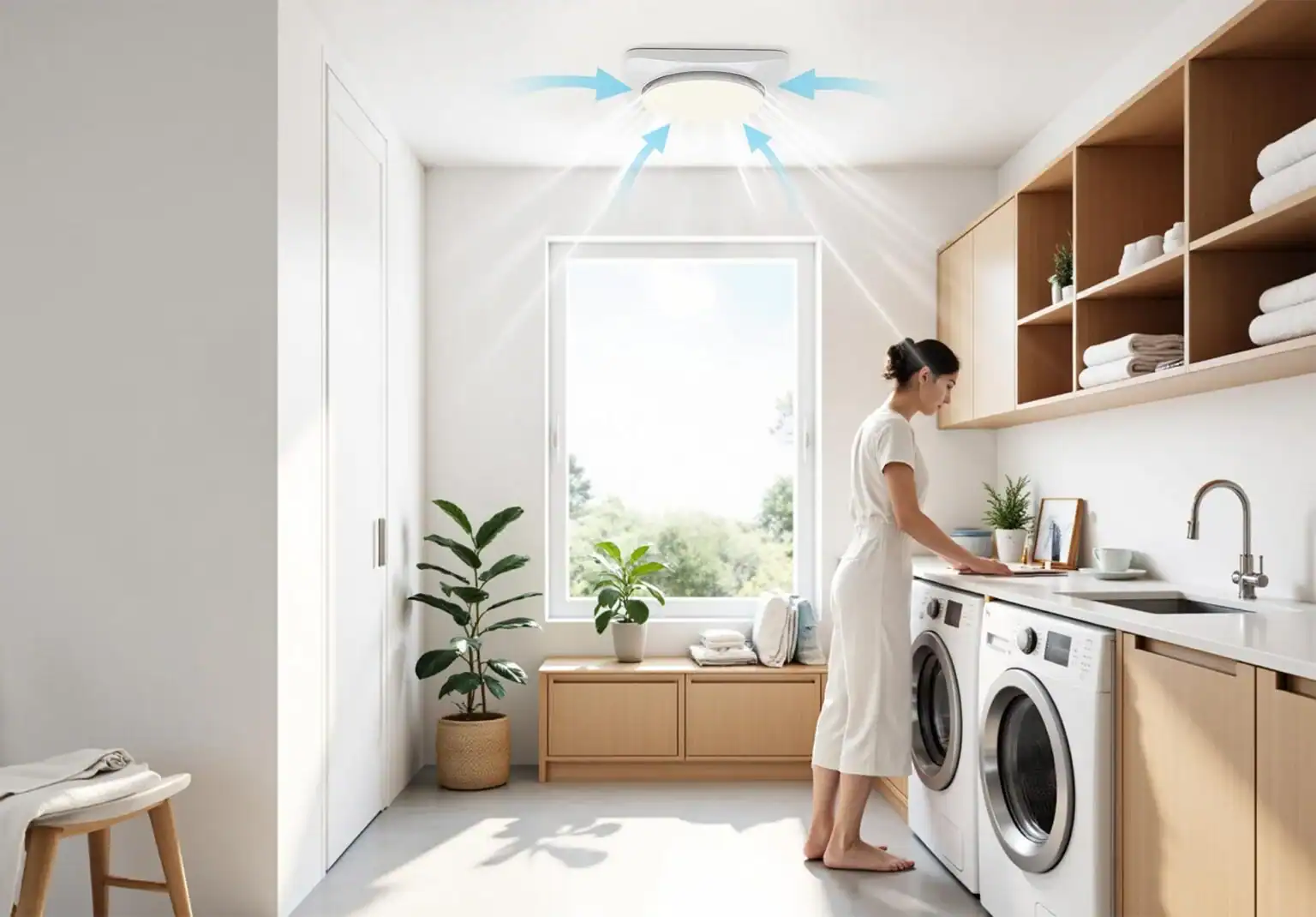
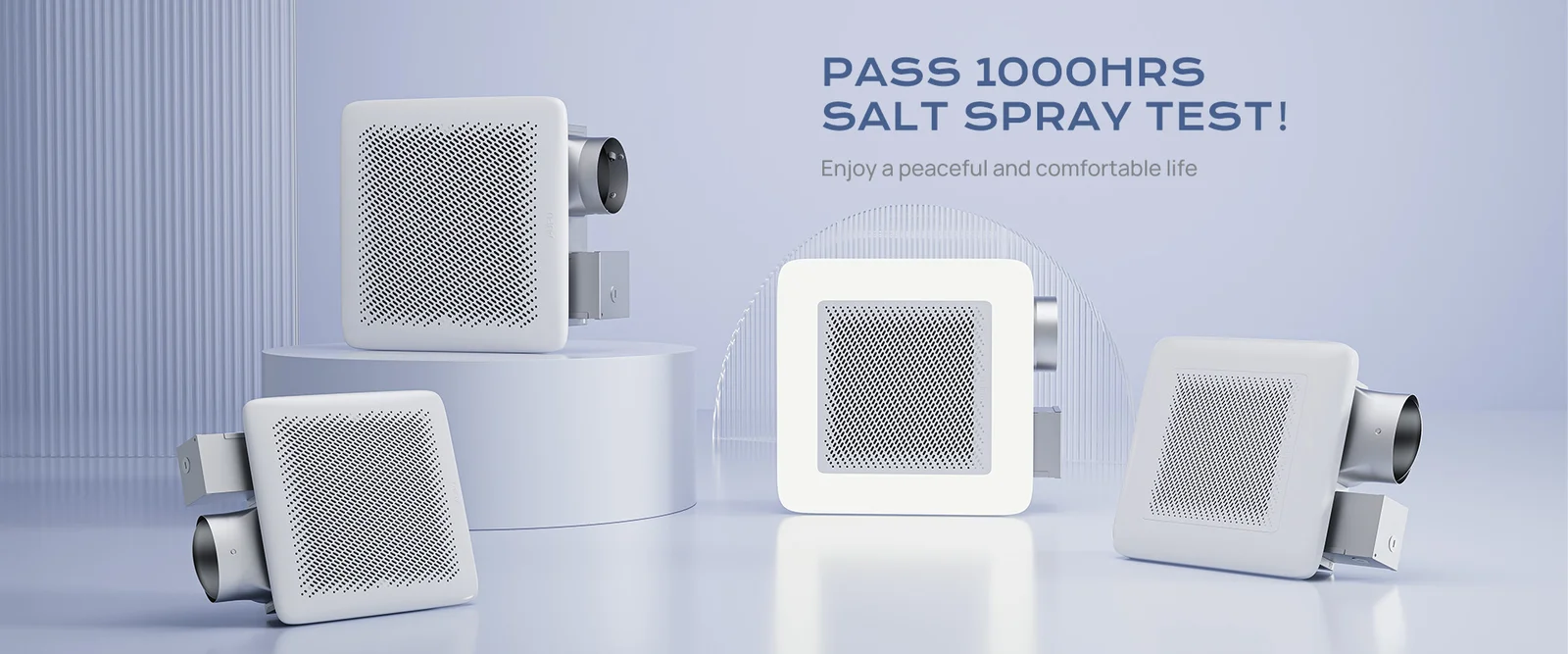
Executive Summary
This Exhaust Fan Engineering Guide provides a comprehensive B2B reference for residential and commercial ventilation systems.
This guide serves as a comprehensive B2B engineering reference for exhaust fan selection, based on key parameters including fan size, airflow capacity (CFM), acoustic performance, and system configuration.
It is designed for HVAC engineers, contractors, distributors, and procurement professionals.
Importance of Ventilation in Building Systems
Ventilation is a core mechanical subsystem in modern construction. Improper system design may result in:
- Moisture accumulation and mold growth
- Poor indoor air quality
- Grease buildup in kitchen environments
- Increased HVAC energy consumption
- Reduced building material lifespan
Proper system selection must be based on real installation performance rather than laboratory-rated airflow.
Engineering Principle: Rated Airflow vs Installed Performance
Exhaust fan performance is typically measured under free-air conditions, which do not reflect real-world installation environments.
| Condition | Rated CFM | Installed Performance |
|---|---|---|
| Free air | 100% | 100% |
| Short duct system | 85–90% | 70–80% |
| Long or high-resistance duct system | 80–90% | 50–70% |
Static pressure is the primary factor affecting real airflow performance in installed systems.
Dual-Dimension Selection Framework
Proper exhaust fan selection requires evaluation of two core dimensions:
Fan Size (Installation Constraint)
- 6 inch: compact spaces and small bathrooms
- 8 inch: standard residential applications
- 10 inch: large residential and kitchen applications
- 12 inch: commercial and industrial applications
Airflow Capacity (CFM Performance)
- Low CFM: small bathrooms and compact rooms
- Medium CFM: standard residential bathrooms
- High CFM: kitchens and large rooms
- Very high CFM: commercial ventilation systems
Both parameters must be matched for correct system design.
BFF Engineering System Overview
BLDC Motor Technology
BFF ventilation systems use brushless DC motor technology designed for:
- Energy reduction up to 40%
- Adaptive speed control under load conditions
- Stable airflow under static pressure
- Service life exceeding 50,000 hours
Static Pressure Engineering Design
BFF systems are engineered for real installation environments including:
- Long duct routing systems
- Multi-floor vertical exhaust systems
- High humidity and grease environments
- Retrofit installation constraints
Performance is validated under installed conditions rather than free-air testing.
Certifications and Compliance
- ETL and CSA electrical compliance
- HVI verified airflow and acoustic performance
- Energy efficiency certification standards
Size and CFM Selection Matrix
| Room Type | Fan Size | Airflow (CFM) | Application |
|---|---|---|---|
| Small bathroom | 6 inch | 50–80 CFM | Compact residential bathrooms |
| Standard bathroom | 8 inch | 80–110 CFM | Residential bathrooms and hotel rooms |
| Large bathroom / kitchen | 10 inch | 110–200 CFM | Villas and kitchen ventilation |
| Commercial space | 12 inch | 200–400+ CFM | Hotels, warehouses, industrial buildings |
This matrix provides a standardized engineering reference for system selection.
Product System Categories
Ultra Quiet Bathroom Exhaust Fans
Designed for acoustic-sensitive residential and hospitality environments.
Key features:
- Low-noise BLDC motor system
- Optimized impeller structure
- Acoustic housing design
- Noise levels between 0.8–1.5 sones
Applications:
- Residential bathrooms
- Hotels
- Premium apartments
Bathroom Exhaust Fans with Humidity Sensor
Automated ventilation systems for energy-efficient moisture control.
Key features:
- Integrated humidity detection
- Automatic operation control
- Energy-saving logic system
Applications:
- Smart homes
- High-humidity bathrooms
Exhaust Fans with LED Lighting Integration
Combined ventilation and lighting systems for modern architectural applications.
Key features:
- Integrated LED lighting module
- Space-saving ceiling design
- Dual-function system (air + light)
Applications:
- Bathroom renovation projects
- Hotel bathroom systems
High Airflow Exhaust Fans (10–12 Inch Class)
Designed for high-resistance and commercial applications.
Key features:
- High airflow output
- Reinforced motor structure
- Static pressure resistance design
Applications:
- Kitchens
- Commercial buildings
- Industrial ventilation systems
Airflow Calculation Method
Base Formula
CFM = Room Area × 1.07
Adjustment Factors
- Bathroom applications: baseline requirement
- Kitchen applications: +30% airflow adjustment
- Long duct systems: +10–25% resistance compensation
Final selection must consider installed static pressure conditions.
Acoustic Performance Standards
| Environment | Noise Level (Sones) |
|---|---|
| Ultra quiet residential | 0.8–1.5 |
| Standard residential | 1.5–3.0 |
| Commercial environments | 3.0+ |
Noise levels increase under duct resistance conditions.
Competitive Engineering Comparison
| Feature | Standard Fans | BFF Systems |
|---|---|---|
| Motor type | AC motor | BLDC motor |
| Airflow stability | Decreases under load | Stable under static pressure |
| Energy efficiency | Moderate | Up to 40% improvement |
| Acoustic performance | Basic | Engineered noise control |
| Testing method | Free-air testing | Real installation conditions |
OEM and ODM Manufacturing Capability
BFF provides full customization for B2B partners:
- Motor performance customization
- Housing design modification
- Private label manufacturing
- Project-based CFM calibration
- Large-scale production capability
Product Ecosystem & Application Coverage
This guide is part of a structured product ecosystem covering multiple ventilation applications across residential and commercial environments.
Related systems include:
- 6 inch compact ventilation systems
- 8 inch residential exhaust fan systems
- 10 inch kitchen and villa ventilation systems
- 12 inch commercial ventilation systems
- Ultra quiet ventilation solutions
- Humidity-controlled smart systems
- LED integrated ventilation systems
- CFM-based engineering selection guides
Keyword to Product Mapping
- Ultra quiet bathroom exhaust fan: BLDC low-noise system
- Bathroom exhaust fan with humidity sensor: smart automation system
- Exhaust fan with LED light: integrated lighting ventilation system
- Bathroom exhaust fan 110 CFM: 8 inch residential model
- 8 inch exhaust fan: standard residential ventilation system
- 10–12 inch exhaust fan: high airflow commercial system
Engineering Selection Process
Application Definition
- Moisture control
- Heat and grease removal
- Continuous airflow
- Space optimization
Fan Size Selection
- 6, 8, 10, or 12 inch
Airflow Requirement
- Based on room volume and usage intensity
System Resistance Evaluation
- Duct length
- Number of bends
- Exhaust outlet conditions
Conclusion
Ventilation performance must be evaluated based on real installation conditions rather than laboratory airflow ratings.
BFF systems are engineered to deliver:
- Stable airflow under resistance conditions
- Low noise operation
- High energy efficiency
- Integrated functional design
B2B Engineering Support & Procurement
For technical and commercial support:
- Request product catalog
- Submit project specifications
- Request OEM or bulk pricing
- Engineering consultation for large-scale projects
Actual airflow is lower than rated CFM because laboratory testing is performed under free-air conditions, while real installations involve static pressure from duct systems, elbows, and outlet restrictions. These factors reduce effective airflow in real-world applications.
The 8 inch exhaust fan is the most commonly used standard for residential bathrooms. It provides a balanced airflow range (typically 80–110 CFM) suitable for most home and hotel bathroom applications.
Bathroom exhaust fans are primarily designed for moisture and humidity removal, while kitchen exhaust fans require higher airflow capacity and grease resistance. Kitchen applications typically require higher CFM and more robust static pressure handling.
The Sone rating measures perceived noise level of an exhaust fan. Lower Sones indicate quieter operation. For residential applications, a range of 0.8–1.5 Sones is considered ultra-quiet and suitable for bedrooms, bathrooms, and hotels.
Yes. Humidity sensor-based exhaust fans automatically activate only when moisture levels rise, reducing unnecessary operation and improving overall energy efficiency.
Yes. LED integrated exhaust fans combine lighting and ventilation in a single unit, making them ideal for modern bathroom designs where space efficiency and multi-functionality are required.
The main factors include duct length, number of bends, installation height, and overall static pressure in the system. These conditions directly impact actual airflow performance compared to rated specifications.