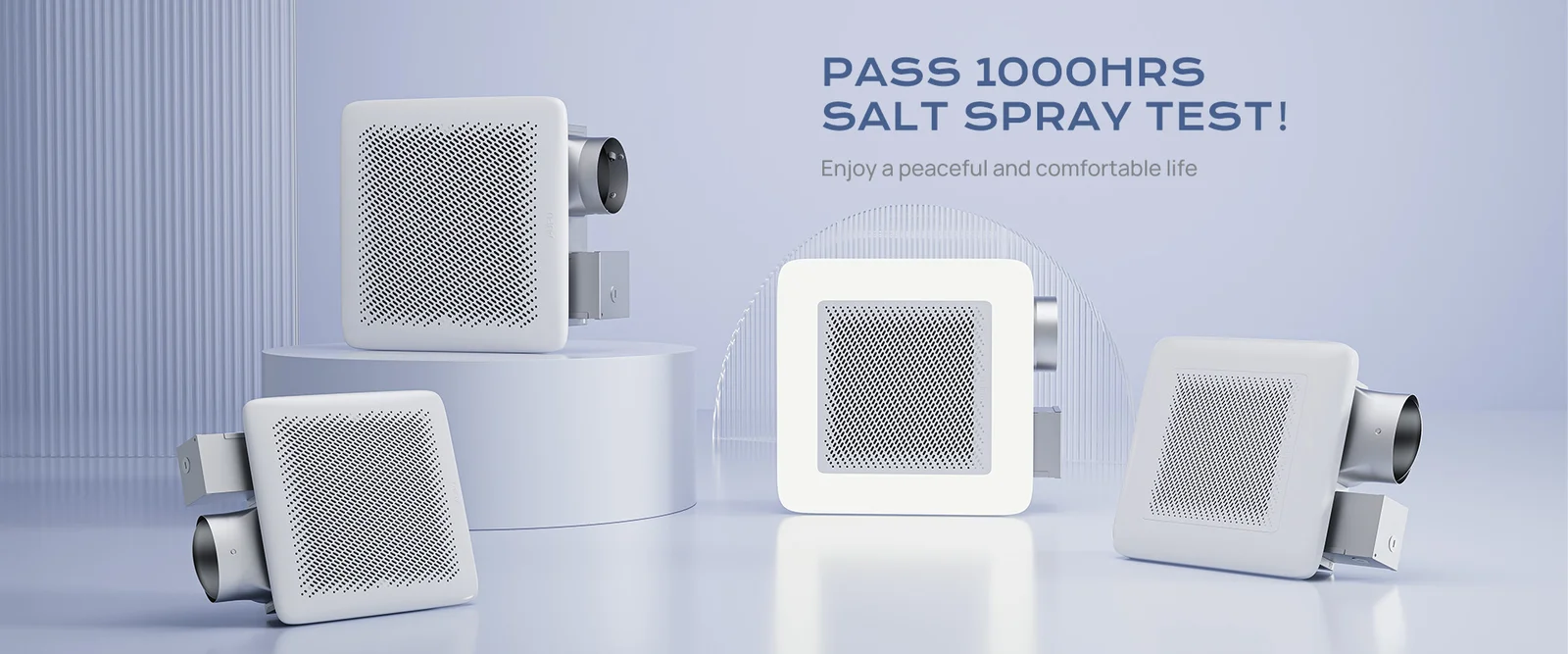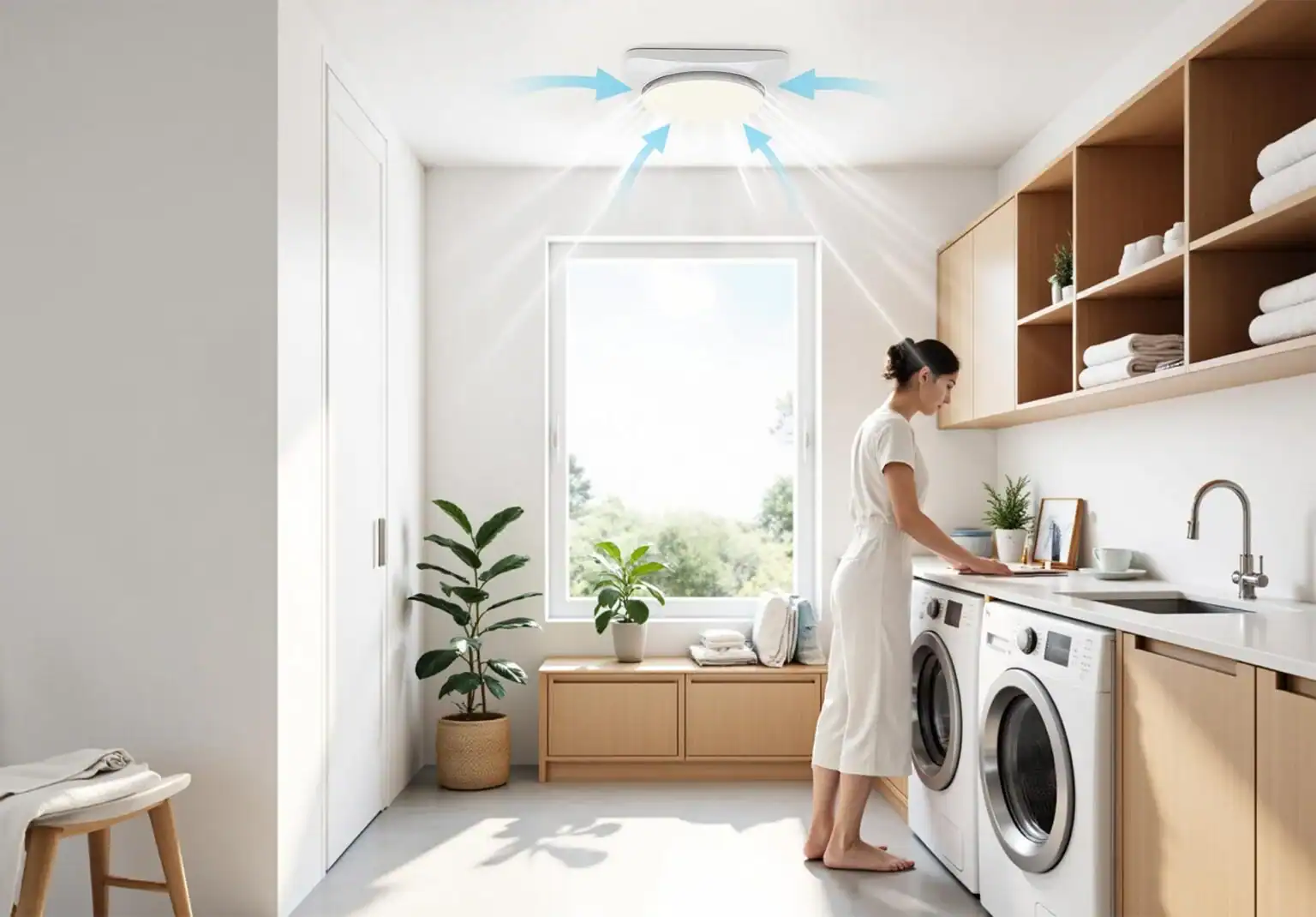

Choosing between a bathroom fan 80 vs 100 CFM is one of the most common decisions in residential and commercial ventilation projects. While both can work well, the right choice depends on bathroom size, humidity load, and usage habits rather than just airflow numbers. Understanding the technical differences in a bathroom fan 80 vs 100 CFM comparison ensures long-term moisture protection for your property.
Quick Comparison Table
| Feature | 80 CFM Series | 100 CFM Series |
|---|---|---|
| Recommended Room Size | Up to ~80 sq. ft. | Up to ~100 sq. ft. |
| Air Removal Speed | Standard ventilation | Faster moisture removal |
| Noise Level | Typically quieter | 0.8 – 1.0 Sones |
| Energy Consumption | Lower | ~25W |
| Best Use Case | Apartments, guest baths | Master baths, heavy steam |
| BFF Model | PDC-00108X10 | PAC-002110X25 |
How to Choose the Right Airflow
1. Bathroom Size Is the Starting Point
When evaluating a bathroom fan 80 vs 100 CFM, a general guideline is 1 CFM per square foot of bathroom space. However, real-world conditions often require adjustments. An 80 CFM exhaust fan is usually sufficient for small standard bathrooms, while larger or open-layout bathrooms perform better with the 100 CFM upgrade.
2. Moisture Load and Usage
Not all bathrooms of the same size behave the same way. Humidity intensity often matters more than square footage alone. For example, a compact bathroom with a high-flow rain shower may still require the performance of a 100 CFM unit to prevent condensation buildup and protect wall finishes.
3. Ceiling Height and Layout
Higher ceilings trap more moisture, which reduces overall ventilation efficiency. In these cases, opting for a 100 CFM model is usually the safer choice for builders and HVAC contractors to ensure the space dries completely after use.
4. Building Code Requirements
Many local codes — including IRC Section M1507 — require a minimum of 50 CFM for bathrooms. For commercial or multi-family projects, we recommend 80 CFM minimum to exceed code requirements. For projects targeting Energy Star or HVI 2100 certification, 100 CFM models with DC motors offer the best combination of power and energy efficiency while staying compliant.
Why Smart Features Matter for Modern Projects
Modern ventilation units like our PAC-002110X25 are no longer just on/off devices. Integrating a bathroom fan with humidity sensor and timer is now a standard requirement for professional projects. These systems automatically detect moisture and use a delay timer to ensure all steam is exhausted, which prevents mold and structural damage without wasting energy.
For contractors and wholesale buyers, BFF offers both 80 CFM and 100 CFM models with ETL and HVI certified performance across our complete bathroom exhaust fan lineup.
Final Recommendation
The decision between a bathroom fan 80 vs 100 CFM comes down to matching capacity with real-world environment. 80 CFM is excellent for standard residential layouts, while 100 CFM remains the superior choice for master bathrooms or premium commercial projects where air exchange speed is critical. Always prioritize ETL and HVI certified models to guarantee safety and building code compliance.
Not necessarily. If the bathroom is under 80 sq. ft. and has normal usage, 80 CFM is usually enough. However, high humidity conditions may justify upgrading.
It can be slightly oversized, but in practice it is rarely an issue. The main trade-off is slightly higher energy use and cost.
In modern installations, the humidity sensor is often more important because it ensures the fan actually runs when needed, regardless of user behavior.