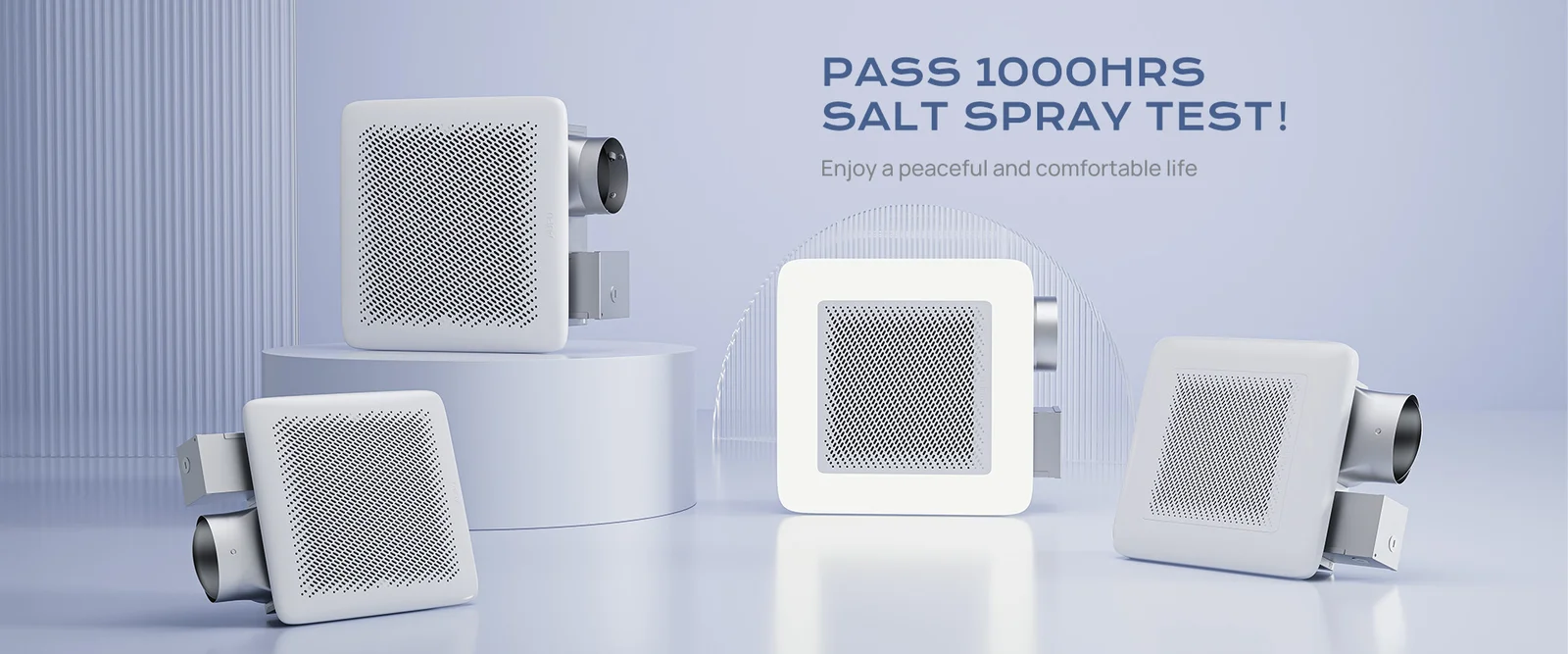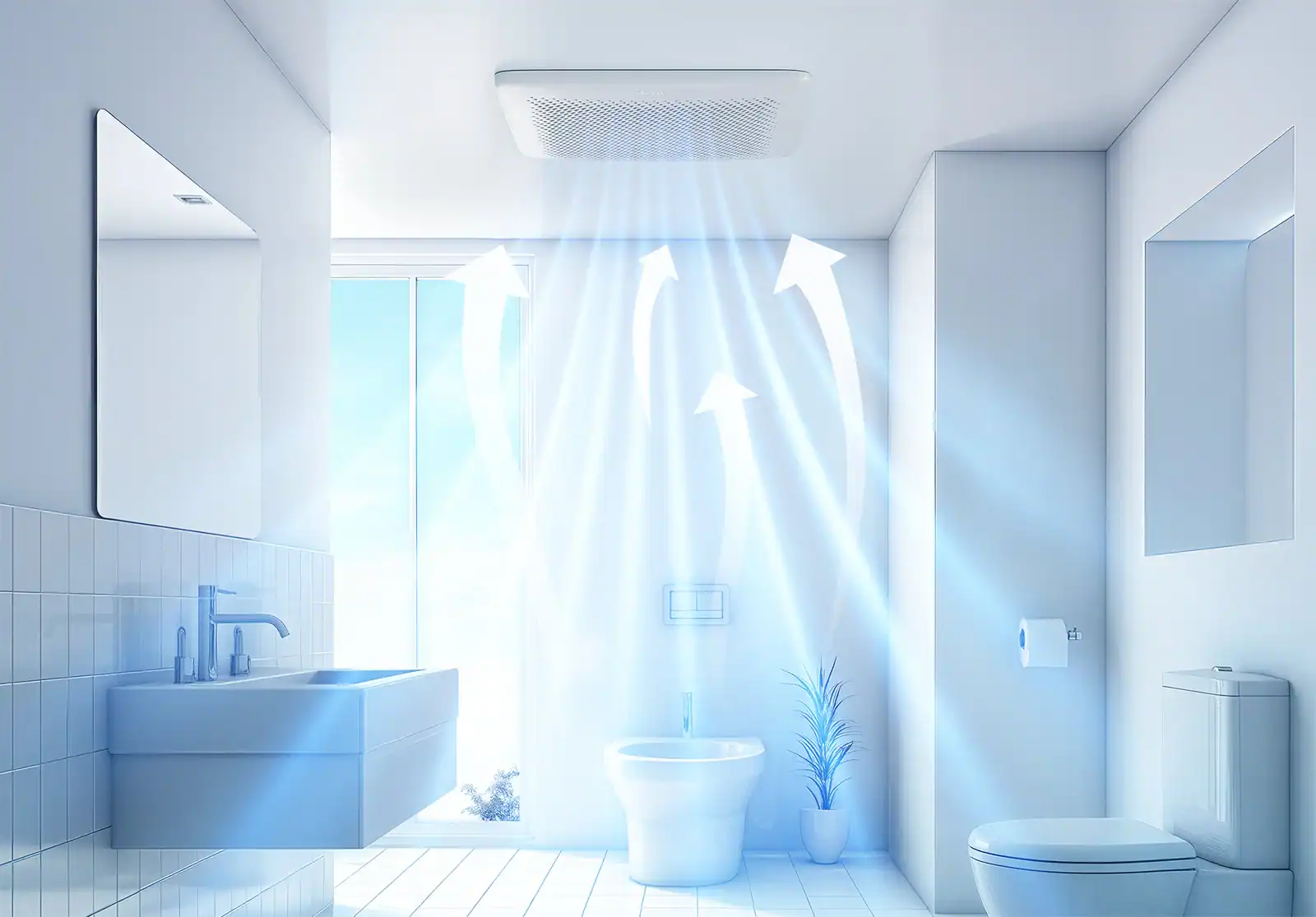

Introduction
Commercial bath exhaust fans are essential components in modern commercial buildings such as hotels, gyms, office complexes, and public facilities. Unlike residential fans, they are engineered for continuous operation, higher airflow demands, and long duct runs while maintaining low noise levels and regulatory compliance.
This guide explains how to select the right commercial bath exhaust fans, what specifications matter, and how to avoid common design and procurement mistakes.
This article is part of a broader Exhaust Fan Engineering Guide, which provides system-level ventilation design principles and engineering standards for residential and commercial applications.
What Are Commercial Bath Exhaust Fans?
Commercial bath exhaust fans are high-performance ventilation systems designed to remove moisture, odors, and airborne contaminants from large or frequently used bathroom environments.
Compared to residential units, they typically feature:
Higher airflow capacity (CFM)
Stronger motors for continuous duty
Improved static pressure handling
Compliance with commercial building codes
These systems are critical for maintaining indoor air quality and preventing mold growth in high-usage environments.
Why Residential Fans Fail in Commercial Applications
Using residential bathroom fans in commercial settings often leads to performance and compliance issues.
Common problems include:
Insufficient airflow for high-traffic usage
Rapid performance drop in long duct systems
Motor overheating due to continuous operation
Excessive noise levels impacting user experience
In contrast, commercial bath exhaust fans are engineered specifically to handle these challenges.
For deeper system-level airflow behavior and installation constraints, refer to the Exhaust Fan Engineering Guide (B2B technical reference).
How to Choose Commercial Bath Exhaust Fans
Selecting the right system requires evaluating several engineering factors.
1. Airflow (CFM Requirements)
Airflow is the most important performance metric.
Minimum guideline: 1 CFM per square foot
High-traffic bathrooms: increase by 20–30%
Showers or humid environments: further adjustment required
Proper sizing ensures fast moisture removal and better air quality.
2. Static Pressure Performance
Commercial duct systems are often long and complex.
A high-quality commercial bath exhaust fan should maintain stable airflow even under high static pressure conditions caused by:
Long duct runs
Multiple bends
Roof or wall exhaust exits
Poor static pressure performance results in significant CFM loss.
Static pressure behavior and real-world airflow degradation are further explained in the Exhaust Fan Engineering Guide, which includes installed-condition performance modeling.
3. Noise Levels (Sones Rating)
Noise control is critical in hospitality and office environments.
Premium commercial systems: 0.8–1.5 sones
Lower sones = better guest experience
Quiet operation is especially important in hotels and medical facilities.
4. Motor Type and Durability
Commercial environments require long-life motors.
Common options include:
BLDC motors: energy efficient, long lifespan (50,000+ hours)
AC motors: traditional, lower upfront cost
BLDC motors are preferred for energy efficiency and maintenance reduction.
5. Size and Configuration (10–12 Inch Systems)
Commercial bath exhaust fans come in larger configurations:
10-inch units: suitable for large suites and multi-user bathrooms
12-inch units: ideal for public restrooms and high-capacity ventilation
Larger duct sizes improve airflow efficiency in commercial applications.
6. Smart Control Features
Modern systems often include automation features:
Humidity sensors for automatic activation
Timers and occupancy detection
Integrated LED lighting
These features improve energy efficiency and reduce manual operation.
Compliance and Safety Standards
When selecting commercial bath exhaust fans, ensure compliance with relevant certifications:
ETL / CSA safety certification
HVI verified airflow and acoustic performance
Energy efficiency compliance for green building standards
These certifications ensure safety, reliability, and performance accuracy.
Best Applications for Commercial Bath Exhaust Fans
These systems are commonly used in:
Hotels and resorts
Fitness centers and gyms
Office buildings
Shopping malls
Public restrooms
Each application requires different airflow and noise considerations.
Recommended Specification Summary
For procurement teams and contractors:
High CFM rating with 20–30% safety margin
Low noise (below 1.5 sones preferred)
BLDC motor for long-term efficiency
Strong static pressure performance
Certified compliance (ETL / HVI)
Conclusion
Commercial bath exhaust fans are a critical component of modern building ventilation systems. Proper selection ensures compliance, energy efficiency, and user comfort. By focusing on airflow, static pressure, noise levels, and motor quality, buyers can significantly improve long-term system performance and reliability.
Proper bath exhaust fan sizing depends on the square footage and usage intensity. For commercial spaces, we recommend a baseline of 1 CFM per square foot. If you are specifying for high-traffic areas, adding a 20% safety margin is an engineering best practice to ensure consistent air turnover.
An inline bath exhaust fan is the ideal solution for commercial layouts with complex ductwork. Unlike standard ceiling-mounted units, inline models can be installed deep within the ceiling plenum, reducing perceived noise in the room while maintaining high-volume airflow through long duct runs.
Absolutely. A remote bath exhaust fan system can be integrated with our smart humidity sensors. This automation ensures the ventilation only runs when moisture is detected, prolonging the motor’s lifespan and preventing mold growth without requiring manual intervention from guests or staff.